Architectural Building Lighting: Why 360° Laser Fiber Optic Is Replacing Traditional LED Facades
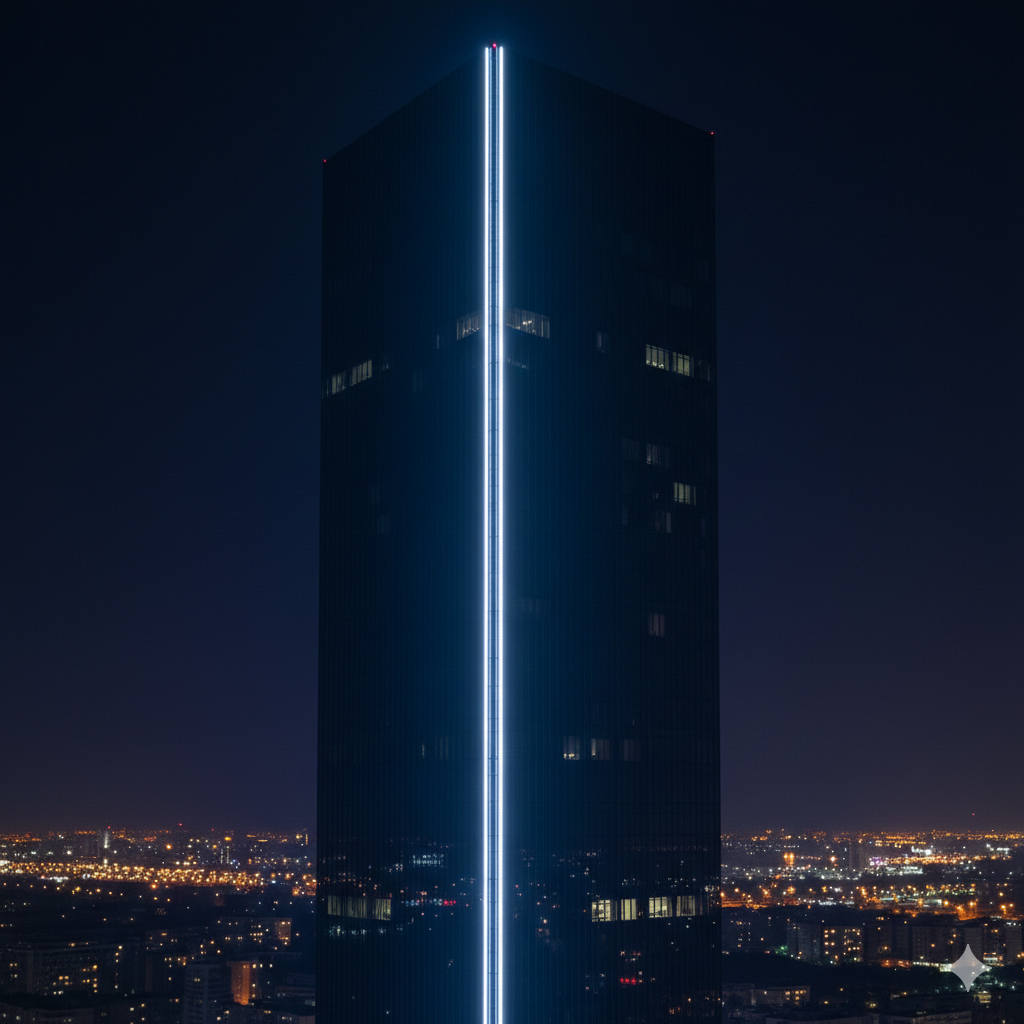
Your building disappears after dark. Every night, thousands of commercial properties across Dallas, Las Vegas, and beyond lose their visual impact the moment the sun sets. Traditional LED facade lighting was supposed to solve this problem, but property owners are discovering its limitations: inconsistent colors, heat damage, electrical hazards near water features, and maintenance headaches that never seem to end.
There's a reason why luxury brands like Genesis chose 360° laser fiber optic technology for their showcase installations. This award-winning system delivers 3x better color saturation than LED ribbon, produces zero heat, and eliminates electrical risk entirely. The same technology illuminating high-end automotive displays is now available for commercial buildings, hotels, casinos, and architectural landmarks.
In this guide, you'll discover why architects and property developers are making the switch, what this technology actually costs, and how to determine if laser fiber optic lighting is right for your building project.
Quick Answer
360° laser fiber optic lighting outperforms traditional LED for building facades because it delivers superior color accuracy, runs up to 200+ meters from a single source, contains zero electricity in the cables (eliminating safety hazards), and requires significantly less maintenance. For commercial properties seeking dramatic nighttime presence with maximum safety, laser fiber optic is the premium choice.
Key Takeaways:
- 3x better color saturation than LED ribbon lighting
- 100% waterproof with zero electrical risk in cables
- Single light source can illuminate 200+ meters of facade
- No heat generation means safer installation near any surface
- LDI 2024 Best New Product Winner — proven technology
What Is Architectural Building Lighting and Why Does It Matter?
Architectural building lighting transforms how people perceive your property after dark. It's the difference between a forgettable structure and a landmark that draws attention from miles away. Whether you own a hotel, office tower, casino, or retail center, facade lighting directly impacts brand recognition, perceived property value, and even tenant satisfaction.
The commercial lighting industry has relied on LED technology for the past decade. And while LED represented a massive improvement over older halogen and metal halide systems, it still comes with significant limitations that property owners are only now beginning to understand.
Our team at Dallas LED Lights has installed thousands of commercial lighting systems. We've seen firsthand what works and what fails. That experience led us to become the exclusive US distributor of 360° laser fiber optic technology — because we recognized that LED alone can't solve every architectural lighting challenge.
The Problem with Traditional LED Facade Lighting
LED facade lighting dominates the market for good reason. It's energy efficient, long-lasting, and available in countless configurations. But when you're lighting a commercial building exterior, LED has real weaknesses:
1. Limited Color Accuracy
Standard LED strips produce colors by mixing red, green, and blue diodes. The result? Colors that look washed out, inconsistent, or simply don't match your brand specifications. When a luxury hotel needs precise brand colors illuminating their facade, LED often falls short.
2. Heat Generation
LED fixtures generate heat. Not as much as older technologies, but enough to cause problems when mounted on certain building materials, near landscaping, or in enclosed spaces. Heat also accelerates component degradation, shortening fixture lifespan.
3. Electrical Current in Every Cable
This is the big one. Traditional LED systems carry electrical current through every inch of cable and every fixture. Near water features, pools, or in wet environments, this creates genuine safety concerns. Even with proper waterproofing, the risk exists.
4. Multiple Failure Points
A typical LED facade installation might include dozens or hundreds of individual fixtures, each with its own driver, connections, and potential failure points. When one section fails, you're scheduling service calls, closing off areas, and dealing with inconsistent lighting until repairs are complete.
For many commercial applications, LED remains the right choice. Our Texas LED Lights team installs LED systems daily for warehouses, parking lots, and general commercial lighting. But for premium architectural facade lighting where safety, color accuracy, and visual impact matter most, there's now a better option.
How 360° Laser Fiber Optic Lighting Works
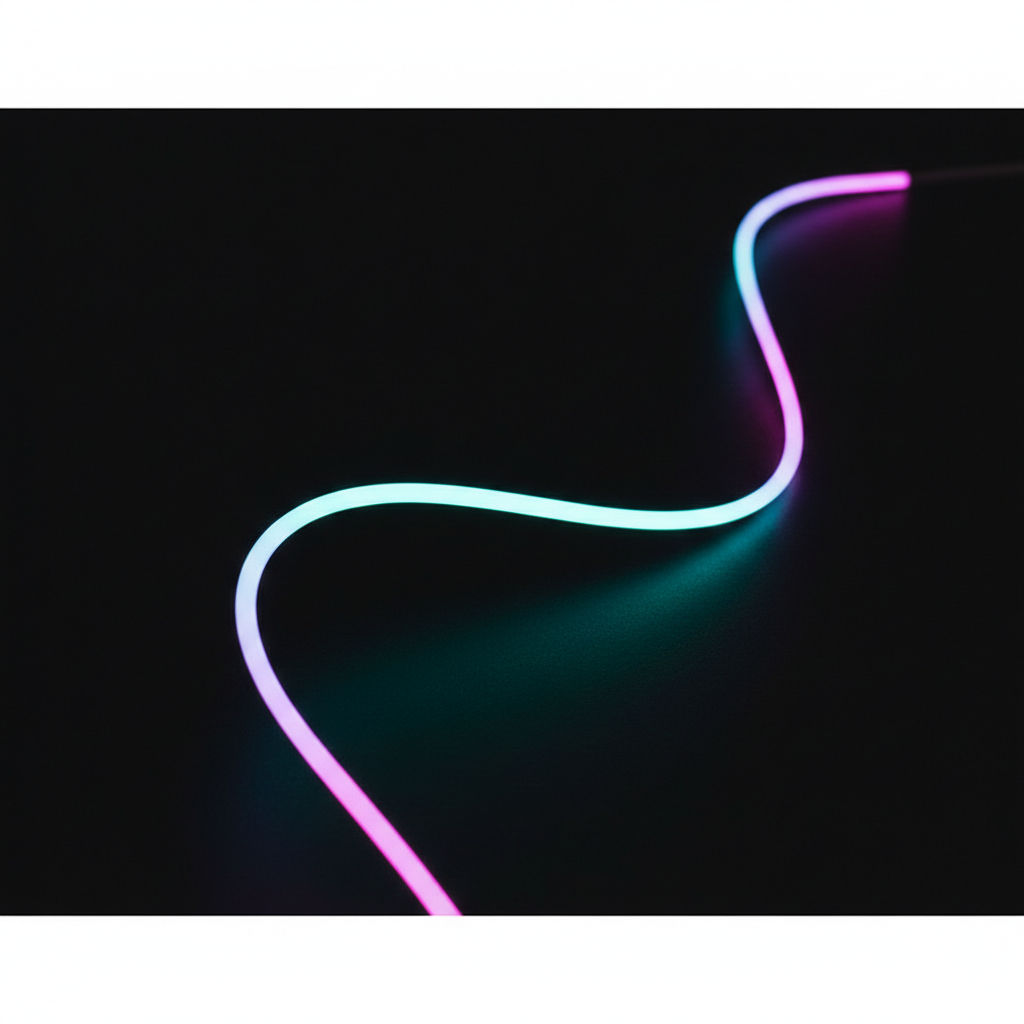
Laser fiber optic lighting fundamentally changes the equation. Instead of running electricity to dozens of individual light fixtures, a single laser illuminator powers flexible fiber optic cables that can extend up to 200+ meters.
Here's the key difference: the fiber optic cables carry only light, not electricity. All electrical components stay safely housed in the remote laser unit. The cables themselves are completely safe to touch, submerge in water, or install in any environment.
True 360° Illumination
Unlike traditional fiber optics that emit light only from the end, 360° laser fiber optic systems illuminate along the entire length of the cable. No dark spots. No uneven lighting. Just perfect, uniform illumination that wraps around architectural features, outlines building contours, and creates effects impossible with conventional LED.
Laser-Powered Color Accuracy
The laser light source delivers 3x better color saturation than LED ribbon. This isn't marketing — it's physics. Laser light produces purer, more vibrant colors with infinite mixing possibilities. From subtle architectural whites to deep saturated brand colors, you get exactly what you specify.
This technology won the LDI 2024 Best New Product Award — recognition from the live entertainment and architectural lighting industry that this represents a genuine advancement, not incremental improvement.
LED vs. Laser Fiber Optic: Head-to-Head Comparison
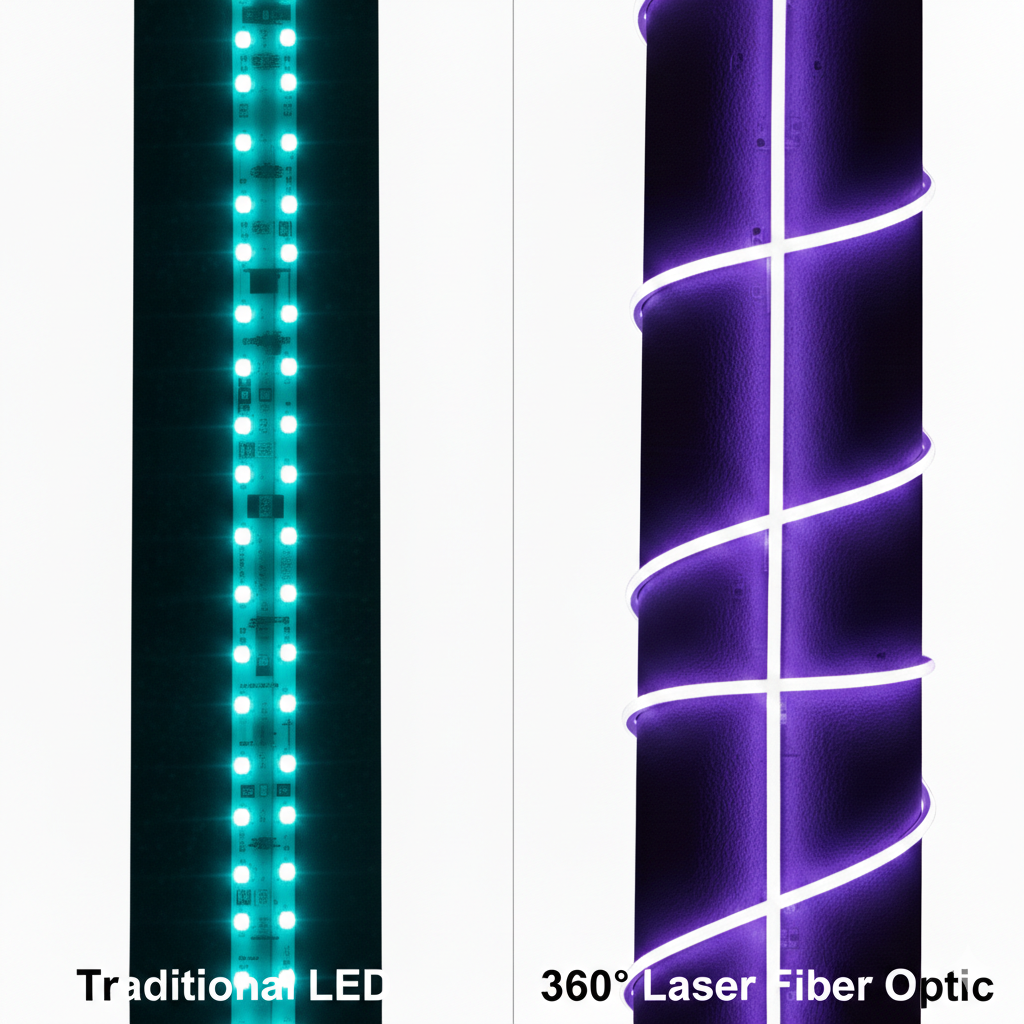
| Feature | Traditional LED | 360° Laser Fiber Optic |
|---|---|---|
| Color Saturation | Standard RGB mixing | 3x better color accuracy |
| Illumination Pattern | One-sided light emission | True 360° coverage |
| Electrical Safety | Current in all cables | Zero electricity in cables |
| Waterproofing | Requires complex sealing | Inherently 100% waterproof |
| Heat Generation | Moderate heat output | Zero heat in cables |
| Maximum Run Length | Limited by voltage drop | 200+ meters from single source |
| Flexibility | Fixed cut points | Cut to any length |
| Maintenance Points | Multiple fixtures/drivers | Single laser unit |
| Environmental Impact | Difficult to recycle | 100% recyclable materials |
Best Applications for Laser Fiber Optic Building Lighting
Not every building needs laser fiber optic technology. For basic security lighting or simple illumination, standard LED remains cost-effective. But for these applications, 360° laser fiber optic delivers results LED simply cannot match:
Hotels and Resorts
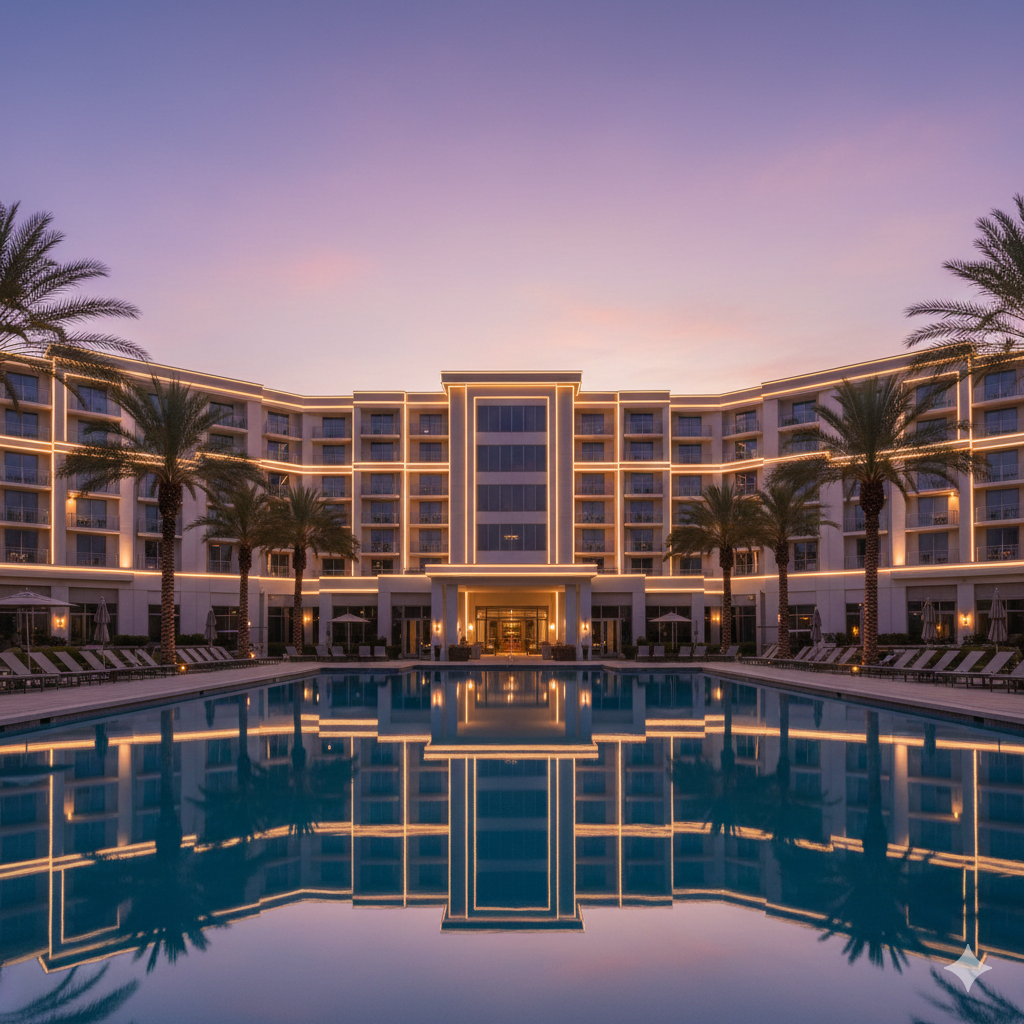
Guest experience starts at the curb. A dramatically lit facade creates that crucial first impression of luxury and attention to detail. The color accuracy means brand colors display exactly as specified, while waterproof installation allows seamless integration with pools, fountains, and water features.
Speaking of pools — our Premium Pool Lighting division specializes in combining architectural facade lighting with underwater illumination for resort-style properties.
Casinos and Entertainment Venues
Las Vegas built its identity on dramatic lighting. Casinos need fixtures that run continuously, display vibrant colors visible from blocks away, and create the excitement that draws visitors inside. The 200+ meter run capability means fewer equipment rooms and simpler infrastructure.
Corporate Headquarters and Office Towers
Modern office buildings use facade lighting to establish corporate identity and create nighttime presence. The single-source design means maintenance happens at ground level — no more scheduling lifts or disrupting tenants to service rooftop fixtures.
Architectural Landmarks and Public Buildings
Museums, government buildings, and cultural institutions need lighting that respects historical architecture while creating contemporary visual impact. The flexibility of fiber optic cables allows installation that follows complex architectural details impossible to light with rigid LED fixtures.
Modular and Prefabricated Buildings
The construction industry increasingly relies on modular building techniques. Our partners at America Modular Buildings and Dallas Modular Structures are integrating lighting systems during fabrication rather than as afterthought installations. Fiber optic's flexibility and safety make it ideal for factory-installed lighting systems.
Architectural Building Lighting Costs: What to Expect
Let's talk real numbers. Architectural facade lighting costs vary significantly based on building size, complexity, and chosen technology.
Traditional LED Facade Lighting Costs
- Basic LED fixtures: $150-$400 per unit installed
- Commercial LED facade systems: $3-$8 per square foot
- Complete small building installation: $10,000-$30,000
- Large commercial projects: $50,000-$200,000+
360° Laser Fiber Optic System Pricing
- Professional Building System: Starting at $9,995 (includes laser unit, 100m cable, controller, installation kit)
- Commercial/Architectural System: Starting at $14,995 (includes 12W laser, 200m cable, DMX controller, multi-zone capabilities)
- Custom large-scale installations: Contact for quote
The upfront cost for laser fiber optic is higher than basic LED. However, the reduced maintenance, longer lifespan, superior performance, and safety benefits often deliver better total cost of ownership for premium installations.
For projects where standard LED makes more sense, our Wiedamark LED wholesale division offers competitive pricing on commercial-grade LED fixtures.
Installation Considerations for Commercial Buildings
Whether you choose LED or laser fiber optic, proper installation determines long-term success. Here's what commercial property owners need to consider:
Electrical Infrastructure
Traditional LED systems require electrical runs to each fixture location. For tall buildings, this means extensive conduit, multiple circuits, and complex load calculations. Laser fiber optic simplifies this dramatically — electrical requirements exist only at the illuminator location.
Building Codes and Permits
Commercial lighting installations must comply with local electrical codes, which vary by municipality. Our teams in Fort Worth, Arlington, Irving, and Plano understand the specific requirements for each jurisdiction in the DFW metroplex.
Mounting and Attachment
Facade lighting fixtures need secure mounting that won't damage building exteriors or void warranties on cladding systems. Fiber optic cables are significantly lighter than LED fixtures, reducing structural requirements and simplifying attachment to delicate surfaces.
Control Systems
Modern architectural lighting typically includes programmable controls for scheduling, color changes, and dynamic effects. Our commercial systems include DMX-compatible controllers for integration with building automation systems.
Combining Technologies: The Hybrid Approach
Many commercial properties benefit from combining LED and fiber optic technologies strategically:
- General area lighting: Energy-efficient LED wall packs and flood lights
- Feature facade lighting: Laser fiber optic for maximum visual impact
- Water features: Fiber optic only (zero electrical risk)
- Landscape accents: LED path lights and uplights
- Interior features: Starlight ceilings using fiber optic technology
This hybrid approach optimizes budget while delivering premium results where they matter most.
Why Dallas and Las Vegas Lead in Architectural Lighting
Our headquarters serve two of America's most dynamic commercial real estate markets. Dallas-Fort Worth's explosive growth means new commercial construction demanding sophisticated lighting solutions. Las Vegas' entertainment industry sets global standards for dramatic architectural illumination.
This dual-market presence gives us unique insight into what works across different property types, climates, and design aesthetics. The systems we recommend have been proven in the Texas heat and the Nevada desert — two of the most demanding environments for outdoor lighting.
The Future of Building Facade Lighting
The architectural lighting industry continues evolving rapidly. Trends we're watching:
Smart Building Integration
Lighting systems increasingly connect to building management platforms, enabling automated scheduling, energy monitoring, and responsive illumination that adjusts to occupancy and events.
Sustainability Requirements
LEED certification and green building standards now influence lighting specifications. Both LED and fiber optic technologies support sustainability goals, though fiber optic's 100% recyclable materials offer advantages for projects targeting the highest certification levels.
Dynamic and Interactive Displays
Buildings are becoming media canvases. The combination of precise color control and flexible installation makes laser fiber optic ideal for dynamic displays that respond to events, seasons, or even real-time data.
Safety-First Design
Building codes and insurance requirements increasingly scrutinize electrical installations, particularly near water. Technologies that eliminate electrical hazards by design — rather than mitigation — will command premium positions in specifications.
Getting Started: Your Building Lighting Project
Ready to transform your building's nighttime presence? Here's how to begin:
Step 1: Assessment
Contact our team for a free consultation. We'll discuss your building's architecture, your goals, and your budget to recommend the right approach — whether that's LED, laser fiber optic, or a hybrid solution.
Step 2: Design
Our lighting designers create detailed plans showing fixture placement, expected results, and infrastructure requirements. For complex projects, we provide photometric analysis and 3D renderings.
Step 3: Proposal
You'll receive a comprehensive proposal including equipment specifications, installation scope, timeline, and investment. We also identify applicable rebates and incentives — utility companies often offer substantial rebates for energy-efficient lighting upgrades.
Step 4: Installation
Our professional installation teams handle everything from permits to final commissioning. We coordinate with your schedule to minimize disruption to building operations.
Step 5: Support
Every system includes warranty coverage and ongoing support. For laser fiber optic systems, the simplified single-source design means most maintenance happens at one accessible location.
Ready to Transform Your Building?
Get a free consultation and discover the perfect lighting solution for your commercial property.
📞 Call (702) 738-2218
Frequently Asked Questions
What is the difference between LED and fiber optic facade lighting?
LED lighting uses light-emitting diodes that require electrical current at each fixture. Fiber optic lighting transmits light from a remote source through flexible cables that carry no electricity. This makes fiber optic inherently safer, especially near water, while also providing superior color accuracy and longer run lengths.
How much does commercial building facade lighting cost?
Traditional LED facade lighting typically costs $3-$8 per square foot for commercial installations, with complete projects ranging from $10,000 for small buildings to $200,000+ for large commercial properties. Premium 360° laser fiber optic systems start at $9,995 for professional packages, with commercial/architectural systems starting at $14,995.
Is fiber optic lighting safe for buildings near pools or water features?
Yes — fiber optic lighting is the safest option for installations near water. Because the cables carry only light (not electricity), there is zero risk of electrical shock even if cables are submerged or damaged. All electrical components remain safely housed in the remote illuminator unit.
How long does architectural lighting installation take?
Installation timelines depend on building size and complexity. Small commercial projects may complete in 1-2 days. Large facade installations typically require 1-2 weeks. Fiber optic systems often install faster than equivalent LED systems because they require less electrical infrastructure.
What maintenance does building facade lighting require?
LED systems require periodic inspection of all fixtures, drivers, and connections — multiplied across potentially hundreds of components. Laser fiber optic systems centralize maintenance at the single illuminator unit, dramatically simplifying upkeep. Both technologies benefit from annual professional inspection.
Can facade lighting be integrated with building automation systems?
Yes. Modern architectural lighting systems include DMX-compatible controllers that integrate with building management systems. This enables automated scheduling, dynamic color programming, and coordination with other building systems like HVAC and security.
What colors are available with laser fiber optic lighting?
RGB laser systems provide unlimited color possibilities through mixing of red, green, and blue. This includes millions of colors from subtle warm whites to deep saturated hues. The laser light source delivers 3x better color saturation than LED, producing more vibrant, accurate colors.
How far can fiber optic cables run from the light source?
360° laser fiber optic systems can illuminate cable runs up to 200+ meters from a single illuminator — far exceeding traditional fiber optic limitations. This allows a single light source to illuminate multiple building facades or extensive architectural features.
Do utility companies offer rebates for commercial lighting upgrades?
Yes. Most major utilities offer rebates for energy-efficient lighting installations. Programs vary by location, but rebates can offset 20-40% of project costs. Our team identifies applicable rebates and handles paperwork as part of every commercial installation.
What warranty comes with laser fiber optic lighting systems?
360 Fiber Lighting systems include 1-3 year warranties depending on package level. Residential Starter systems include 1-year coverage, Professional Pool Systems include 2-year coverage, and Commercial/Architectural Systems include 3-year comprehensive warranty.