Safest Pool Lighting: Why Fiber Optic Is the Only Zero-Electrocution Option for Your Pool
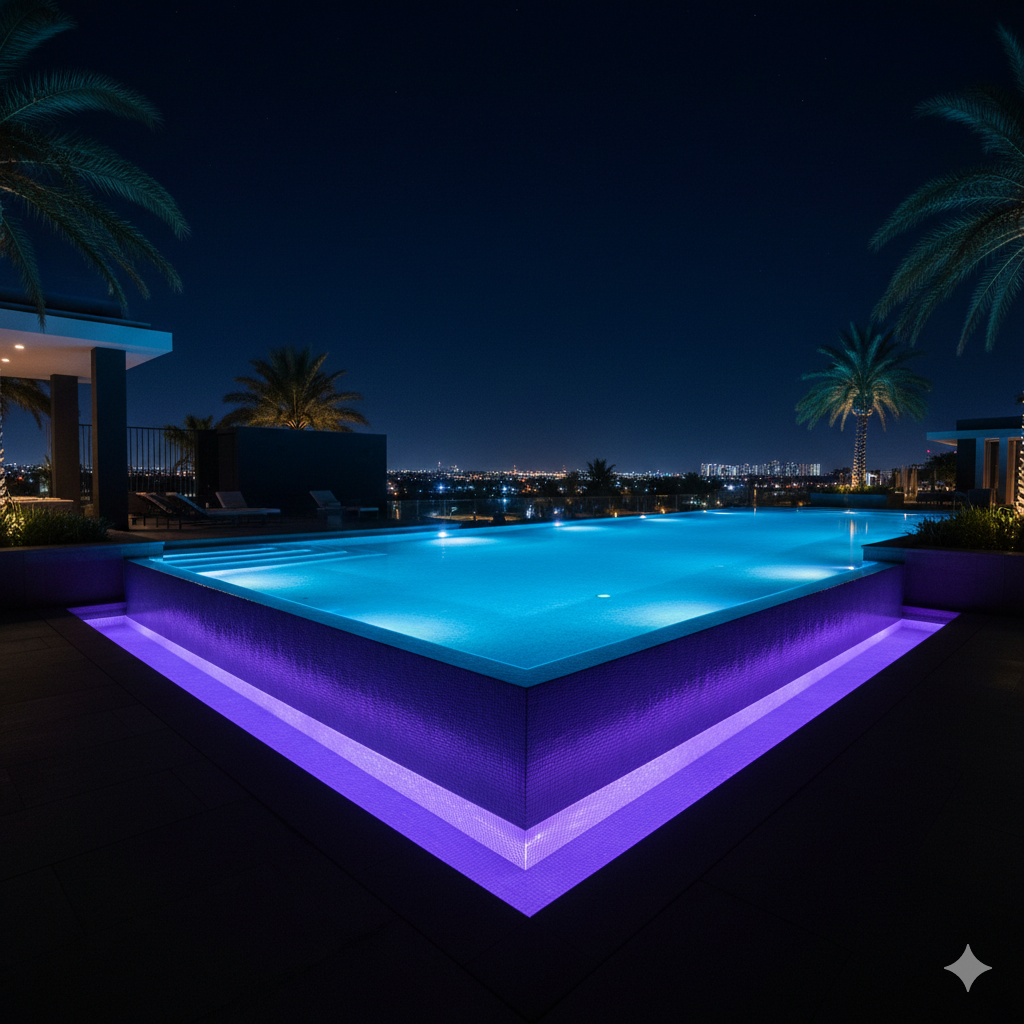
Every parent's nightmare isn't drowning — it's something they never see coming. The U.S. Consumer Product Safety Commission reports 33 deaths and 33 serious injuries from pool electrocutions since 2002. The cause? Faulty wiring in underwater lights, pool pumps, and electrical equipment that sends deadly current directly into the water where your family swims.
Here's what most pool owners don't know: traditional LED and halogen pool lights carry live electrical current right up to the water's edge. One seal failure, one cracked housing, one wiring fault — and your pool becomes electrified. Swimmers feel tingling, then muscle paralysis, then they can't swim. It's called Electric Shock Drowning (ESD), and it happens in pools across America every year.
There's only one pool lighting technology that eliminates this risk entirely: fiber optic lighting. The cables carry light — not electricity — so there's zero electrical current anywhere near the water. This guide explains why fiber optic is the safest pool lighting choice, how it compares to LED, and why luxury pool owners are making the switch.
Quick Answer
Fiber optic lighting is the safest pool lighting technology available because the cables carry only light — never electricity. All electrical components stay safely housed in a remote illuminator, completely separated from the water. This makes electrocution physically impossible, unlike LED or halogen systems that run live current to every underwater fixture.
Key Safety Facts:
- Zero electricity in fiber optic cables — only light
- 100% waterproof — can be fully submerged indefinitely
- No heat generation — safe to touch, even when illuminated
- Single remote light source eliminates multiple failure points
- CPSC reports 33 deaths from pool electrocution since 2002 — all preventable
The Hidden Danger in Your Pool: Electric Shock Drowning
Electric Shock Drowning (ESD) is a silent killer that most pool owners have never heard of. Unlike dramatic electrocution scenes in movies, ESD happens quietly. A small amount of electrical current leaks into the pool water — often from underwater lights or pump equipment. Swimmers feel a slight tingling sensation. Within seconds, the current paralyzes their muscles. They can't call for help. They can't swim. They simply sink.
According to the Electric Shock Drowning Prevention Association, most victims show no visible signs of distress. Bystanders often don't realize anything is wrong until it's too late. The current doesn't have to be strong — just 50 milliamps can cause muscle paralysis and prevent a swimmer from reaching safety.
What Causes Pool Electrocution?
The CPSC and electrical safety experts identify these primary causes of pool electrical accidents:
- Faulty underwater light wiring: Seals degrade, housings crack, and connections corrode — any of these can allow current to leak into water
- Improper bonding and grounding: Pool equipment must be electrically bonded together; improper installation creates shock hazards
- Damaged pool pump equipment: Pumps, filters, and heaters near the pool can energize the water if wiring fails
- Missing GFCI protection: Ground Fault Circuit Interrupters should cut power instantly, but they can fail or be improperly installed
- Aging electrical systems: Older pools often have outdated wiring that doesn't meet current safety codes
Our teams at Dallas LED Lights have seen firsthand how pool electrical systems degrade over time. Even professionally installed LED systems require ongoing maintenance to remain safe — a single compromised seal can turn your pool into a hazard.
Why Traditional Pool Lighting Is Inherently Risky
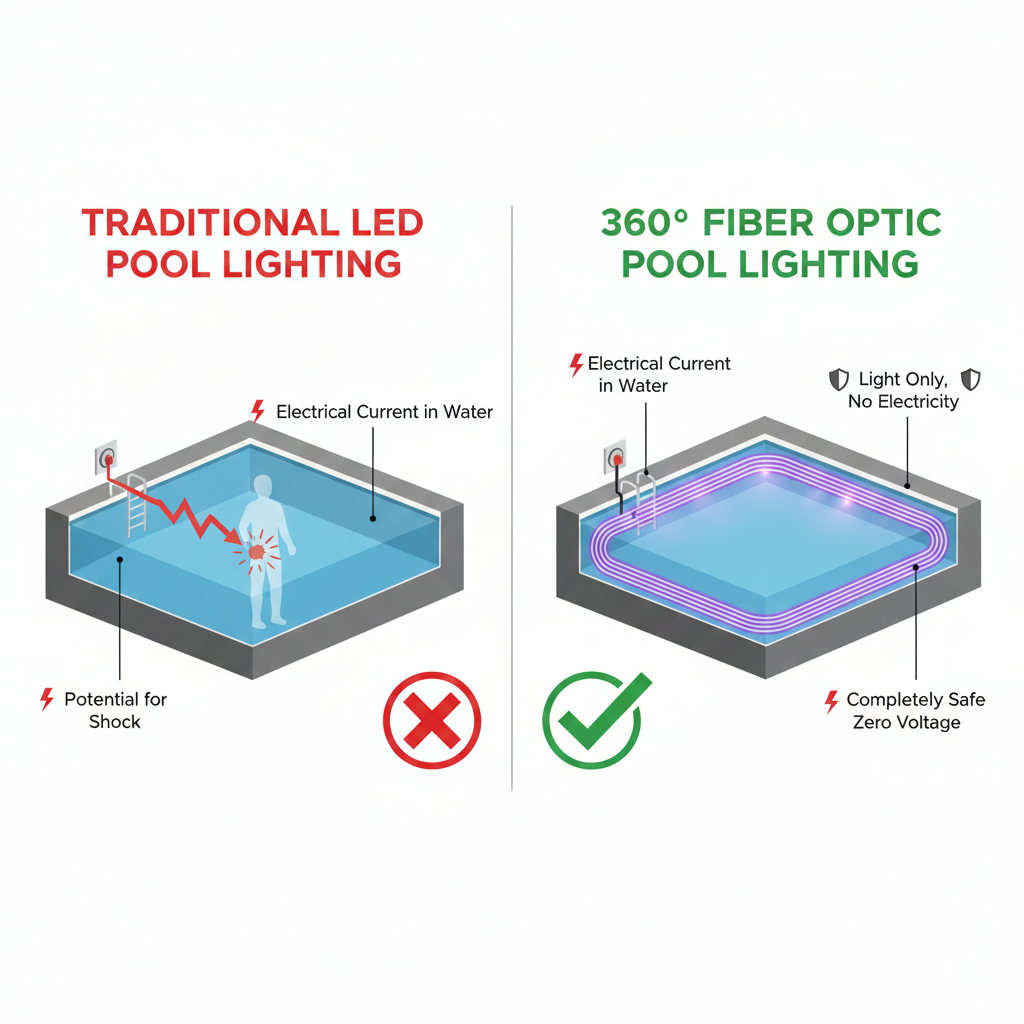
Let's be clear: properly installed and maintained LED pool lights are generally safe. The industry has developed multiple safety layers — low-voltage systems, GFCI protection, waterproof housings, bonding requirements. When everything works correctly, the risk is low.
But "when everything works correctly" is doing a lot of heavy lifting in that sentence.
The Problem with LED Pool Lights
Traditional LED pool lights operate on 12V or 120V systems. Either way, electrical current flows through cables, into the light fixture, and stops just inches from the water your family swims in. The system relies on:
- Watertight seals that must remain intact for years underwater
- Waterproof housings that resist chemical exposure, UV degradation, and physical damage
- Proper installation by qualified electricians who follow code exactly
- Functioning GFCIs that must be tested regularly and replaced when they fail
- Complete bonding of all metal components including ladders, rails, and equipment
Each of these is a potential failure point. And in a backyard pool, who's checking? Most homeowners never test their GFCIs. They don't inspect light housings for cracks. They don't know if their pool was properly bonded when it was built 15 years ago.
For commercial pools, the stakes are even higher. A hotel, resort, or apartment complex faces massive liability if a guest is injured by electrical fault. Our partners at Texas LED Lights increasingly recommend fiber optic solutions for commercial aquatic facilities specifically because they eliminate this liability entirely.
How Fiber Optic Pool Lighting Eliminates Electrical Risk
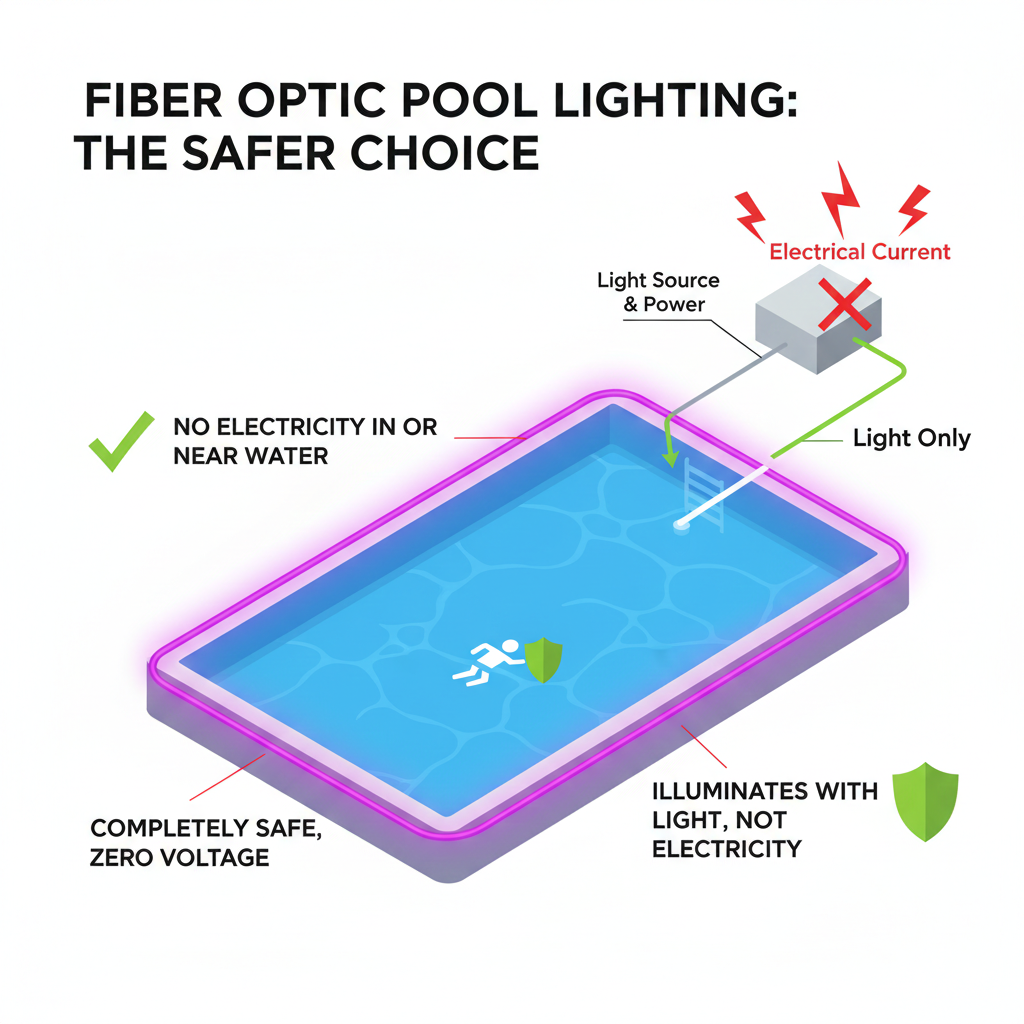
Fiber optic lighting works on a fundamentally different principle. Instead of running electrical current to each light fixture, a single illuminator generates light in a remote location — typically in an equipment room or dry area far from the pool. This light then travels through flexible fiber optic cables to wherever you need illumination.
Here's the critical difference: the fiber optic cables carry only light, never electricity. You could cut a fiber optic cable underwater while the system is running, and nothing would happen. No shock. No spark. No danger. The cables are simply plastic or glass strands that transmit photons.
360° Laser Fiber Optic Technology
At 360 Fiber Lighting, we've taken fiber optic pool lighting to the next level with 360° laser illumination technology. Unlike traditional fiber optics that emit light only from the end, our cables illuminate along their entire length — creating continuous ribbons of color that can outline your entire pool perimeter, water features, and architectural elements.
This technology won the LDI 2024 Best New Product Award, recognition from the live entertainment and architectural lighting industry that this represents a genuine advancement in fiber optic capability. The same technology lighting Genesis luxury automotive displays is now available for residential and commercial pools.
Key Safety Advantages
| Safety Factor | Traditional LED | Fiber Optic |
|---|---|---|
| Electricity in water | Yes — current flows to fixture | No — only light in cables |
| Electrocution risk | Possible if system fails | Physically impossible |
| Heat generation | Moderate at fixture | Zero in cables |
| Waterproofing required | Critical — failure is dangerous | Inherently waterproof |
| GFCI dependency | Essential safety backup | Not needed for safety |
| Failure points | Multiple (each fixture) | Single (remote illuminator) |
| Safe if cable is damaged | No — potential shock hazard | Yes — just loses light |
Who Needs the Safest Pool Lighting?
While every pool owner should prioritize safety, certain situations make fiber optic lighting particularly valuable:
Families with Children
Children are most vulnerable to electrical hazards. Their smaller bodies conduct electricity more efficiently, and they can't always communicate when something feels wrong. Parents who want absolute peace of mind choose fiber optic because it removes the possibility of electrical incident entirely — not just reduces the risk.
Hotels, Resorts, and Commercial Properties
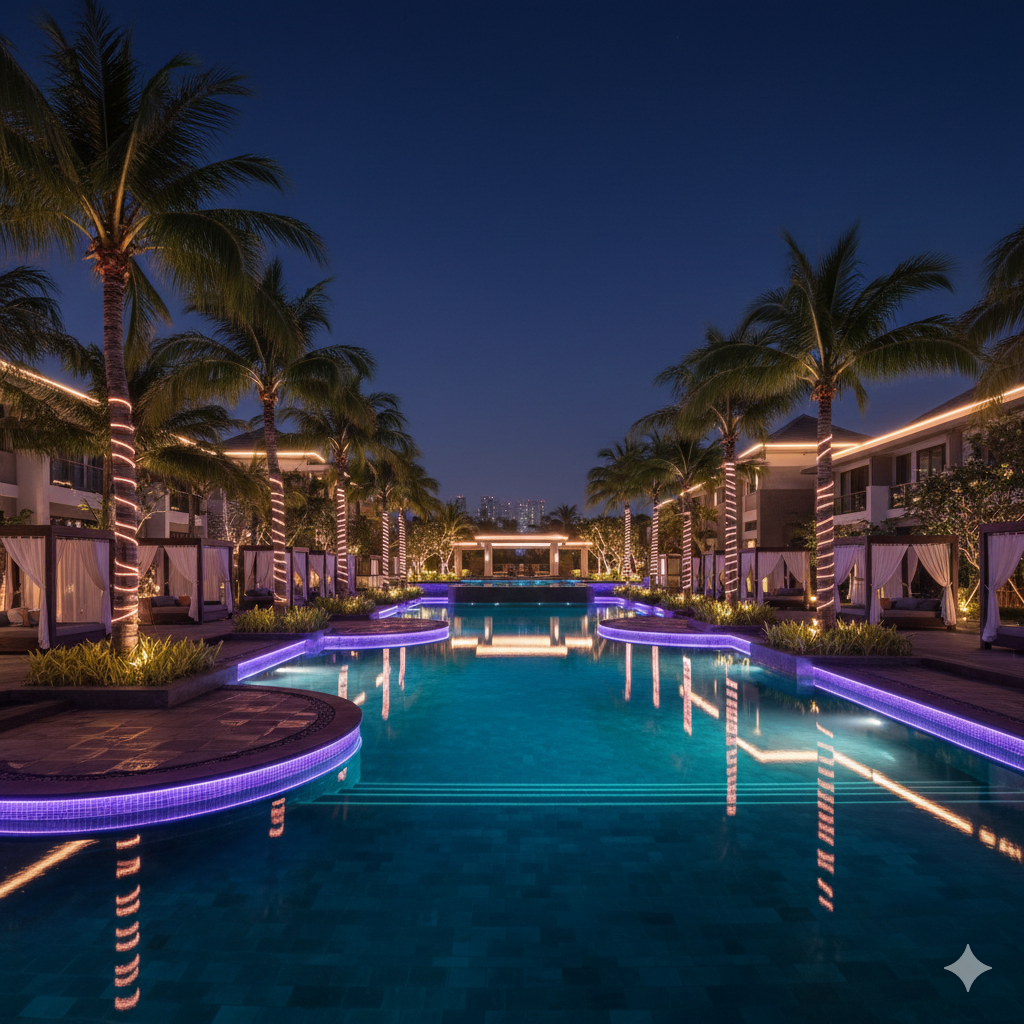
Commercial aquatic facilities face significant liability exposure. A single electrical incident can result in lawsuits, regulatory action, and devastating publicity. Our commercial clients in Las Vegas and Dallas increasingly specify fiber optic systems specifically for risk management. When you can tell insurers and regulators that your pool lighting carries zero electrical current in the water, you've eliminated an entire category of liability.
Our Premium Pool Lighting division specializes in commercial installations where safety, aesthetics, and reliability all matter.
Older Pools with Aging Electrical Systems
Pools built decades ago often have electrical systems that don't meet current codes. Upgrading to modern LED with proper bonding, grounding, and GFCI protection can cost thousands and require significant construction. Converting to fiber optic eliminates the need for underwater electrical work entirely — the illuminator stays in your equipment area, and only safe fiber cables enter the pool environment.
Pools with Water Features
Fountains, waterfalls, grottos, and other water features multiply electrical complexity. Each feature needs its own lighting, often in locations that are difficult to access and maintain. Fiber optic simplifies dramatically — a single illuminator can power cables running to dozens of locations, with no electrical connections anywhere near water.
Spas and Hot Tubs
The warm, chemically-treated water in spas accelerates corrosion and seal degradation. Combined with the fact that spa users are typically stationary (not swimming away from a problem area), this makes spa electrical safety particularly important. Fiber optic eliminates the concern entirely.
Beyond Safety: Additional Benefits of Fiber Optic Pool Lighting
Safety is the primary reason to choose fiber optic, but it's not the only benefit:
Superior Color Quality
360° laser fiber optic systems deliver 3x better color saturation than LED ribbon lighting. The laser light source produces purer, more vibrant colors that make your pool a genuine showpiece after dark. Whether you want subtle white ambiance or dramatic color-changing effects, fiber optic delivers results LED simply cannot match.
Simplified Maintenance
Traditional pool lighting means climbing into wet environments, dealing with underwater fixtures, and troubleshooting multiple potential failure points. Fiber optic concentrates all maintenance at a single, dry, accessible illuminator. If something needs service, you work in your equipment room — not underwater.
Longer Cable Runs
LED systems are limited by voltage drop — run cables too far and lights dim or fail to work. Our 360° laser fiber optic systems can illuminate cables up to 200+ meters from a single source. This allows dramatic lighting designs that wrap entire properties, connect multiple water features, and create effects impossible with conventional lighting.
Design Flexibility
Fiber optic cables are thin, flexible, and can be cut to any length. They can follow complex curves, outline irregular shapes, and fit into spaces where rigid LED fixtures won't work. This makes them ideal for creative pool designs, custom water features, and architectural integration.
For interior applications like starlight ceilings in pool houses and home theaters, the same fiber optic technology creates stunning effects safely.
Fiber Optic vs. LED Pool Lighting: Complete Comparison
| Feature | LED Pool Lights | 360° Fiber Optic |
|---|---|---|
| Electrical safety | Depends on proper installation/maintenance | Inherently safe — no electricity in water |
| Color saturation | Standard RGB mixing | 3x better — laser light source |
| Illumination pattern | Point source / one-sided | 360° continuous illumination |
| Maximum run length | Limited by voltage drop | 200+ meters from single source |
| Waterproofing | Requires sealed fixtures | Inherently 100% waterproof |
| Heat in pool | Some heat at fixtures | Zero heat in cables |
| Maintenance location | Underwater / wet areas | Remote equipment room |
| Failure mode | Potential shock hazard | Just loses light — no danger |
| Upfront cost | Lower | Higher (premium solution) |
| Best for | Budget installations, simple pools | Safety-focused, luxury, commercial |
What Does Safe Pool Lighting Cost?
Let's talk real numbers. Pool lighting costs vary based on pool size, complexity, and chosen technology.
Traditional LED Pool Lighting
- Basic LED pool light fixture: $300-$800 installed
- Color-changing LED system: $500-$1,500 per light
- Complete pool lighting (typical residential): $1,500-$5,000
- Annual inspection/maintenance: $150-$300
360° Laser Fiber Optic Systems
- Residential Pool System: Starting at $4,995 (includes laser illuminator, perimeter cable, controller)
- Professional Pool System: Starting at $9,995 (includes 12W laser, 100m cable, DMX controller)
- Commercial/Resort System: Starting at $14,995 (includes extended cable runs, multi-zone control)
- Maintenance: Minimal — single illuminator service only
Yes, fiber optic costs more upfront. But consider what you're buying: complete elimination of electrical hazard, superior visual impact, simplified maintenance, and — for commercial properties — dramatically reduced liability exposure. For many pool owners, that peace of mind is priceless.
For projects where LED makes more sense budget-wise, our teams in Fort Worth, Arlington, Irving, and Plano can ensure your LED installation meets the highest safety standards.
Installation: What to Expect
Installing fiber optic pool lighting is typically simpler than LED because there's no underwater electrical work required.
For New Pool Construction
The ideal time to install fiber optic is during pool construction. Conduit for fiber cables can be placed during the shell phase, and the system integrates seamlessly with pool design. We work with pool builders across the Dallas-Fort Worth area and Las Vegas to specify and install fiber optic systems as part of new construction.
For Existing Pools
Retrofitting fiber optic to an existing pool is straightforward for perimeter lighting — cables can often be installed in existing coping channels or purpose-built tracks. Underwater fiber optic effects may require more significant work but are still possible in most pools.
Equipment Requirements
The laser illuminator requires a weatherproof location with standard electrical supply. This is typically in an existing pool equipment area, garage, or dedicated enclosure. From there, fiber cables run to the pool — no additional electrical infrastructure needed at the water.
Our partners at America Modular Buildings and Dallas Modular Structures are even incorporating fiber optic lighting into modular pool houses and equipment enclosures for turnkey installations.
Keeping Your Pool Safe: Essential Steps
Whether you choose fiber optic or maintain existing LED lighting, these safety practices are essential:
If You Have Traditional Pool Lighting
- Test GFCIs monthly: Press the "test" button and verify power cuts off immediately
- Annual electrical inspection: Have a licensed electrician check all pool electrical components
- Watch for warning signs: Tingling in water, flickering lights, or moisture in light housings all indicate problems
- Know your shutoff: Label and know how to quickly cut power to all pool equipment
- Never swim if something seems wrong: Exit immediately if you feel any unusual sensation
Signs Your Pool Needs Upgraded Lighting
- Pool lighting system is more than 10 years old
- Visible moisture or corrosion in light fixtures
- Lights flicker or behave erratically
- You've had any electrical issues with pool equipment
- Previous electrical work wasn't done by licensed professionals
- You simply want the safest option available
Why Dallas and Las Vegas Trust 360 Fiber Lighting
Our dual presence in Dallas-Fort Worth and Las Vegas means we understand the demands of both residential and commercial aquatic environments. Texas heat and Nevada desert conditions test lighting systems to their limits — the systems we recommend have proven themselves in these challenging environments.
More importantly, we're not just selling lighting — we're solving problems. Our Wiedamark LED wholesale division serves customers who need cost-effective LED solutions. Our fiber optic systems serve those who prioritize absolute safety and premium performance. We recommend the right technology for each situation.
Get Started: Your Safe Pool Lighting Consultation
Ready to upgrade to the safest pool lighting available? Here's how to begin:
Step 1: Consultation
Contact our team for a free consultation. We'll discuss your pool configuration, safety concerns, aesthetic goals, and budget to recommend the right approach.
Step 2: Assessment
For existing pools, we evaluate current electrical systems and lighting to determine the best upgrade path. For new construction, we coordinate with your pool builder from the design phase.
Step 3: Design
Our lighting designers create a detailed plan showing cable placement, illuminator location, and expected visual results. For complex projects, we provide renderings so you can see the result before installation.
Step 4: Installation
Professional installation ensures everything is done right. We handle permitting, coordinate with other contractors, and test everything before handoff.
Step 5: Enjoy
Swim with complete peace of mind knowing your pool lighting carries zero electrical hazard.
Protect Your Family with the Safest Pool Lighting
Get a free consultation and discover how fiber optic lighting can eliminate electrical risk from your pool.
📞 Call (702) 738-2218
Frequently Asked Questions
Is fiber optic really the safest pool lighting?
Yes. Fiber optic is the only pool lighting technology that carries zero electricity in the cables. All electrical components remain in a remote illuminator, far from the water. This makes electrocution physically impossible — not just unlikely, but impossible. No other lighting technology can make this claim.
How common is pool electrocution?
According to the U.S. Consumer Product Safety Commission, 33 deaths and 33 serious injuries from pool electrocution have been reported since 2002. While relatively rare, these incidents are almost always preventable. Fiber optic lighting eliminates this risk entirely.
What is Electric Shock Drowning (ESD)?
Electric Shock Drowning occurs when electrical current leaks into pool water and passes through a swimmer's body. Even low current levels can cause muscle paralysis, preventing the victim from swimming or calling for help. Victims often appear motionless in the water with no visible signs of distress.
Are LED pool lights safe?
Properly installed and maintained LED pool lights with functioning GFCI protection are generally safe. However, they rely on multiple safety systems working correctly — waterproof seals, proper bonding, functioning circuit interrupters. If any component fails, electrical hazard is possible. Fiber optic eliminates this concern entirely.
Can I retrofit fiber optic lighting to an existing pool?
Yes. Perimeter fiber optic lighting can often be installed without major construction using existing coping channels or surface-mounted tracks. More complex underwater effects may require additional work. We assess each pool individually to determine the best installation approach.
How much does fiber optic pool lighting cost?
Residential fiber optic pool systems start at $4,995, with professional and commercial systems starting at $9,995 and $14,995 respectively. While higher than basic LED, fiber optic eliminates electrical hazard, reduces maintenance, and delivers superior visual impact — value many pool owners consider essential.
Does fiber optic pool lighting work in saltwater pools?
Absolutely. Since fiber optic cables carry no electricity, they're unaffected by the conductive properties of saltwater. This is actually an advantage — saltwater's conductivity makes traditional electrical lighting slightly more hazardous, while fiber optic remains completely safe.
How long do fiber optic pool lighting systems last?
The fiber optic cables themselves are extremely durable and can last decades. The laser illuminator typically provides 20,000-50,000 hours of operation. When the illuminator eventually needs replacement, it's a simple swap at a single location — no underwater work required.
Can fiber optic do color-changing effects?
Yes. Our 360° laser fiber optic systems include DMX-compatible controllers that enable full RGB color mixing, color-changing programs, and dynamic effects. The laser light source actually delivers 3x better color saturation than LED, producing more vibrant and accurate colors.
Is fiber optic pool lighting bright enough?
Yes. 360° laser fiber optic technology produces brilliant illumination that's highly visible. The continuous 360° illumination along the entire cable length actually creates more even coverage than point-source LED fixtures, with no dark spots or uneven areas.