Building Outline Lighting: Roofline Lighting for Homes & Commercial Buildings (2026 Guide)
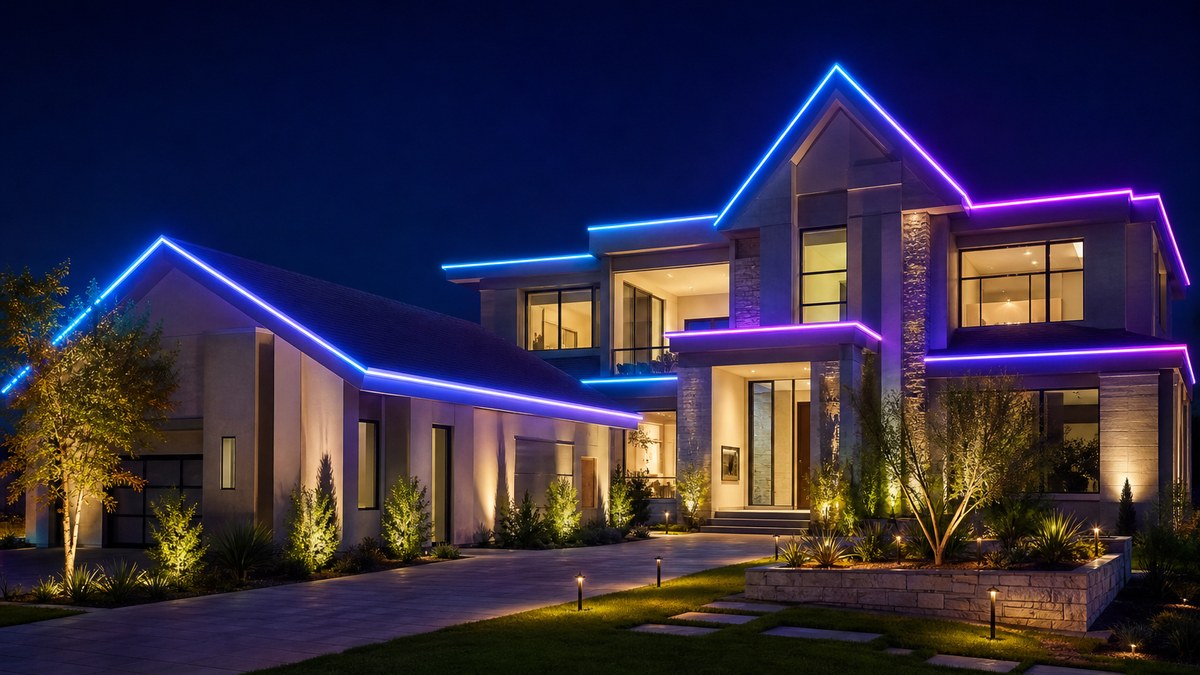
Building outline lighting traces the edges of a structure, its rooflines, gables, eaves, parapets and columns, with a line of light so the whole building reads clearly after dark. Done well, it makes a home look custom-built and turns a commercial building into a landmark. Done poorly, it looks like a string of holiday dots that never came down.
This guide covers the main ways to outline a home or commercial building in 2026, from permanent LED pixel track to LED neon flex to laser-powered 360° fiber optic lighting. You will see how each option looks, how they compare on safety, upkeep and run length, what they cost, and how to plan a roofline lighting project that you will still love in ten years. We include our real system pricing so you can budget with numbers, not guesses.
Building outline lighting is a permanent line of light installed along a building's rooflines and architectural edges. The best-looking systems produce a smooth, continuous line rather than separate dots.
- Options: permanent LED pixel track (dots), LED neon flex or strip (lines with many powered fixtures), or laser fiber optic (a continuous line with zero electricity along the building)
- Why fiber: 360° side-glow fiber glows evenly around its full circumference, carries no current and no heat, and runs 200+ meters from one laser unit
- Sizing: 50 m ≈ 164 ft, 100 m ≈ 328 ft, 200 m ≈ 656 ft of outline
- 360 Fiber system pricing: $7,995 (Residential Starter, 50 m), $9,995 (Professional, 100 m), $14,995 (Commercial / Architectural, 200 m, DMX, multi-zone)
- Power: one laser unit in a dry spot, connected by a licensed electrician per local code
What is building outline lighting?
Outline lighting, also called roofline lighting, trim lighting, or contour lighting, follows the lines an architect drew: the fascia under the eaves, the rake of a gable, the top of a parapet wall, the edge of a canopy, the vertical corners of a tower. Instead of washing a wall with floodlights, it draws the building's shape in light.
For homes, outline lighting adds curb appeal, makes entries and paths easier to see, and gives the house a finished, high-end look at night. Many owners also use it for holidays and events, switching colors for game days, celebrations, or seasons. For commercial buildings, outline lighting is branding. A hotel, restaurant, casino, car dealership, or office tower that glows in its signature color is easier to spot and easier to remember.
There are three main technologies used to outline buildings today:
- Permanent LED pixel track: individual LED nodes (often called pucks or pixels) mounted in a low-profile aluminum channel under the fascia. Popular for homes, mostly for holiday and accent lighting.
- LED neon flex and LED strip: flexible silicone or PVC tubes, or tape, filled with LEDs. They create lines of light, but every section is an electrical fixture that needs power along the building.
- Fiber optic outline lighting: a light source sits in one protected spot and sends light through side-glow fiber cable that runs along the building. Laser-powered 360° fiber is the newest version of this approach.
Dots vs lines: why the look of roofline lighting matters
The biggest difference between outline lighting systems is what you see from the street. Pixel track systems place LED nodes every few inches. Up close they read as a row of dots; from a distance they can look like a line, but the spacing usually shows, especially in photos and on long straight runs. That dotted look is great for animated holiday patterns, but it does not look like architecture.
Side-glow fiber is the opposite. The fiber glows along its full length, so the roofline reads as one solid, smooth stroke of light, closer to neon than to a string of bulbs. Our 360° fiber is designed to glow evenly around its full circumference, so it looks the same from the sidewalk, the driveway, the second-floor balcony, or the air. Owners and architects who want the building to look designed, not decorated, almost always prefer a continuous line.
Stand at the street and take a phone photo of your house at dusk before you choose a system. The lines you notice first, usually the main roofline and the front gables, are the lines that deserve light. Outlining every edge can look busy; outlining the right edges looks expensive.
How laser fiber optic outline lighting works
Every fiber optic lighting system has two parts: the illuminator (the light source) and the fiber that carries the light. In a 360 Fiber Lighting system, the illuminator is a patent-pending laser unit. It mounts in a dry, ventilated spot, such as a garage, attic access, mechanical room, or a weather-protected enclosure, and a licensed electrician provides power to it according to local code.
From the laser unit, the side-glow fiber runs out to the building's edges and sits in a slim mounting channel along the fascia, parapet, or trim. Because laser light is so concentrated, a single unit can drive fiber runs of 200+ meters while keeping vivid color. That matters on buildings, where rooflines are long. Older fiber systems that used halogen or LED illuminators faded over distance, so the far corner of the building looked dim. Laser fiber solves that. Learn more about the 360° laser technology.
What makes fiber different on a building
- Zero electricity in the fiber. The cable carries light only, so there is no current running along the gutters, roof edges, or trim.
- No heat. The fiber stays cool to the touch, which is helpful near wood trim, awnings, and signage.
- 100% waterproof fiber. Rain, sprinklers, and pool splash do not affect the fiber itself.
- Cut to any length. The fiber can be cut to fit each run and bends to follow curves, arches, and round towers.
- One service point. The electronics live in one accessible place instead of being spread along the roofline.
- 100% recyclable materials and award-winning design: the technology was named Best New Product at LDI 2024 and was selected by Genesis for its 2026 GV80 campaign.
Building outline lighting options compared
Here is how the three main approaches compare for homeowners, builders, and commercial property owners.
| Feature | 360° Laser Fiber | LED Neon Flex / Strip | Permanent LED Pixel Track |
|---|---|---|---|
| Look from the street | One smooth, continuous line | Line; hot spots possible at joints | Row of dots |
| Electricity along the building | None in the fiber; one remote unit | Yes, every run is powered | Yes, every node is powered |
| Heat at the trim | None | Some | Some |
| Run from one source | 200+ meters | Limited; needs power feeds along the run | Limited; needs power injection |
| Color quality | Very rich; 3x saturation vs LED ribbon | Good | Good |
| Where service happens | At the dry laser unit | On a ladder at the roofline | On a ladder at the roofline |
| Curves and round shapes | Bends; cut to any length | Bends within limits | Follows straight channel best |
| Best for | Architecture, luxury homes, pools, commercial branding | Signs, accents, interiors | Holiday patterns, animated effects |
None of these is wrong for every project. If your main goal is animated holiday chases, pixel track is built for that. If you want a building that looks architecturally lit every night of the year, with a clean line and no electrical fixtures along the roof, laser fiber is the stronger choice. Many of our customers already use fiber at the pool and extend the same look to the house; see our fiber optic pool lighting buyer's guide and pool perimeter lighting ideas.
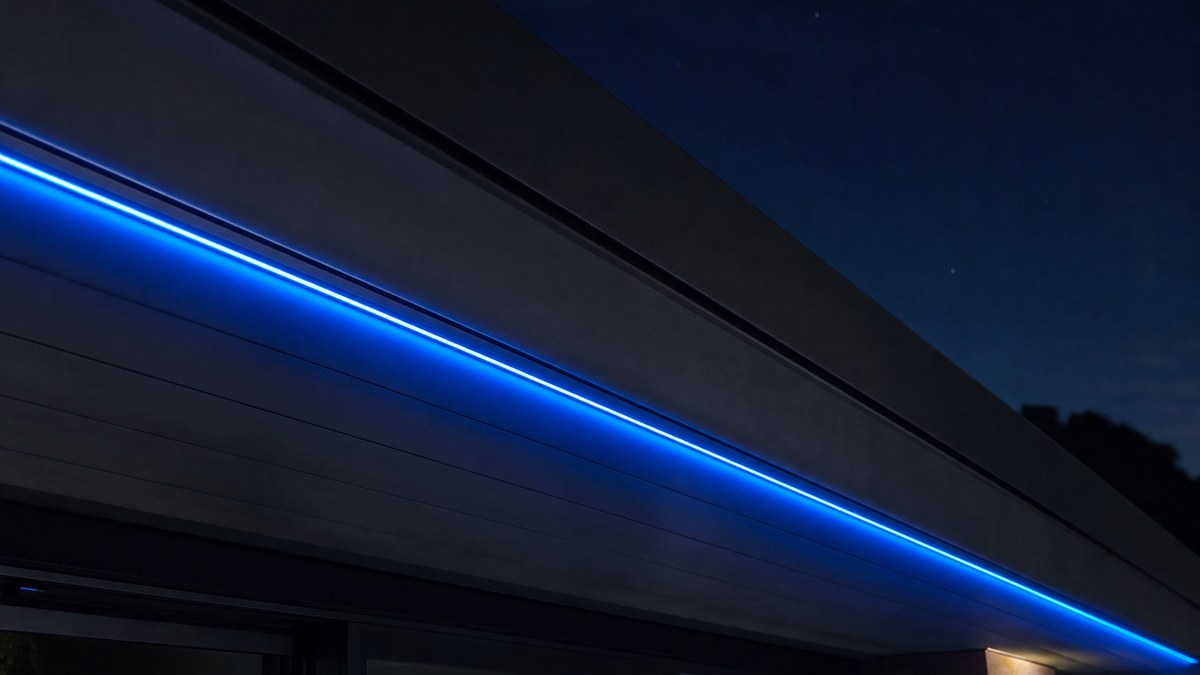
Roofline lighting ideas for homes
1. The main roofline and front gables
The classic outline. Trace the fascia across the front of the house and up each gable. It frames the home like a picture and is usually the best value per meter because it is what everyone sees from the street.
2. Modern flat roofs and parapets
Contemporary homes with flat roofs, cantilevers and parapets are made for outline lighting. A single continuous line along the parapet top or under a cantilevered slab looks dramatic and minimal at the same time.
3. Columns, porches and entries
Outline the porch beam, the entry canopy, or vertical columns to guide guests to the door. Pair it with path and step lighting so the approach feels safe and welcoming.
4. Pool houses, cabanas and pergolas
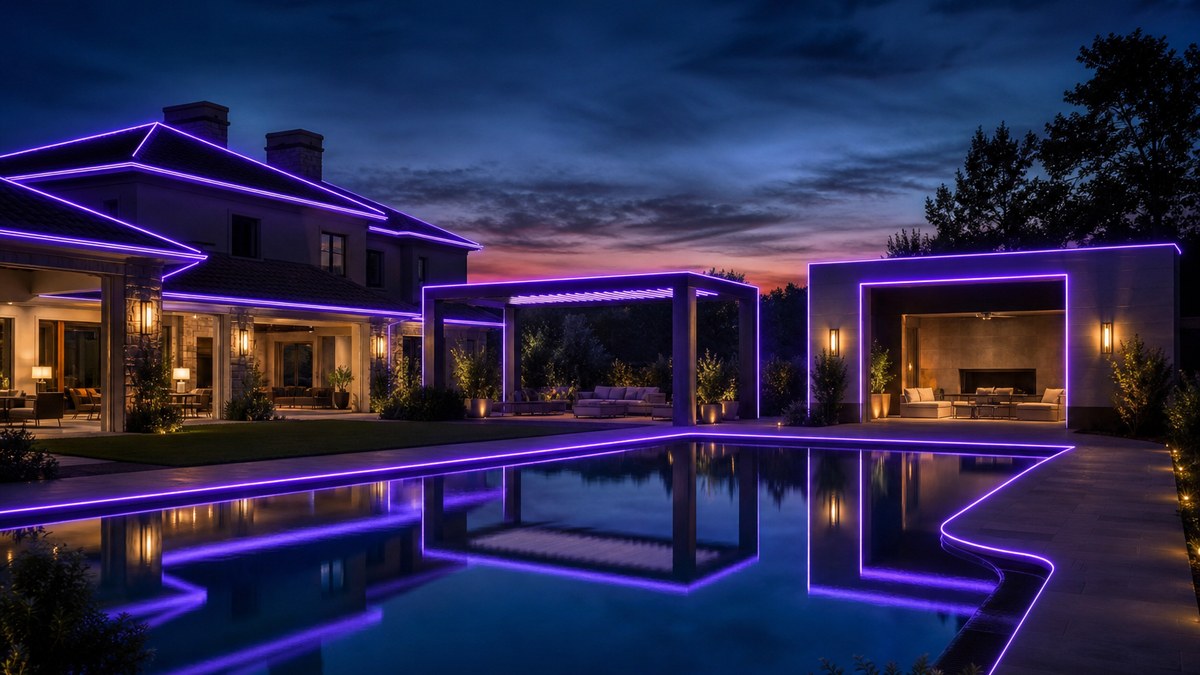
The backyard is where outline lighting and pool lighting meet. Outline the pool house roof, the cabana edge, and the pergola beams in the same color as the pool coping for a resort look. Because the fiber has no electricity, it is ideal near water and wet areas. For pool-first projects and builders, our network partner premium pool lighting focuses on exactly this.
5. Balconies, decks and railings
Trace deck edges, stair nosings, and balcony rails. It adds safety at night and connects the house to the yard visually.
6. Garages, guest houses and outbuildings
Outbuildings often sit far from the main panel. With one laser unit able to drive long runs, it is often possible to light the house and a nearby outbuilding from a single unit, depending on layout. Your consultation will confirm what one unit can cover.
Commercial building outline lighting
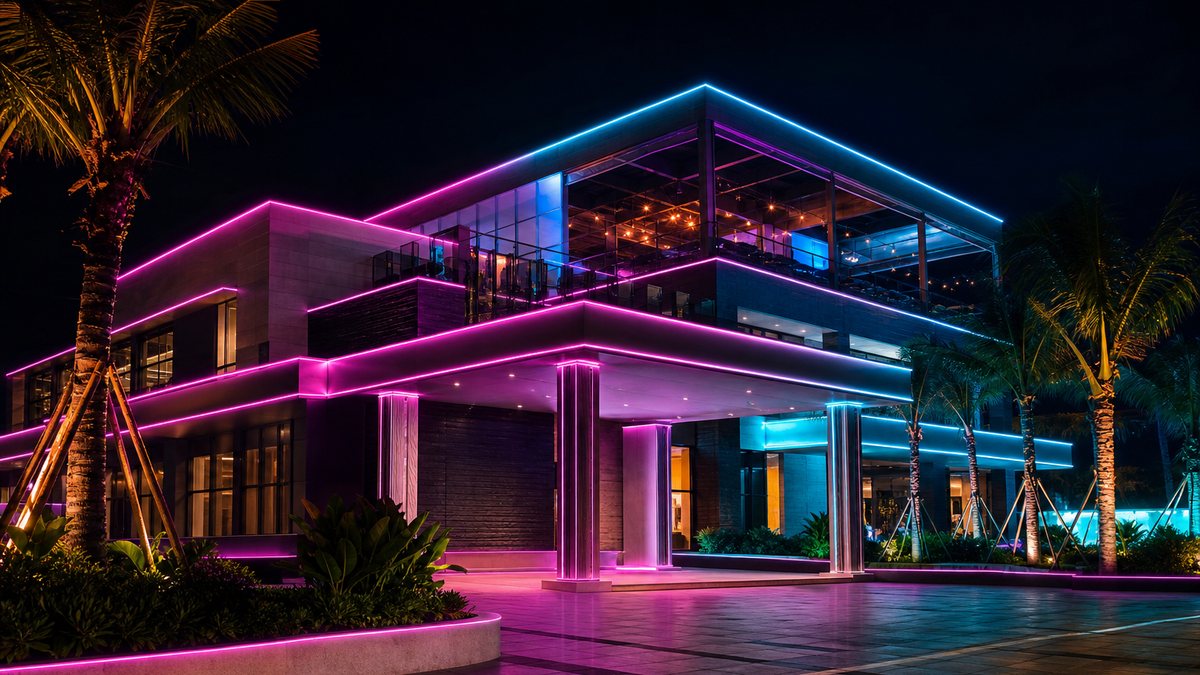
For commercial owners, outline lighting is about visibility, brand color, and reliability. The Commercial / Architectural system was built for these projects: an LF120 12-watt laser unit, 200 meters of fiber, a DMX-compatible controller, multi-zone capability, and custom color programming.
- Hotels and resorts: outline the main building, the porte-cochère, and the pool deck in one coordinated color scheme. See how this connects with water in our safest pool lighting guide.
- Restaurants, rooftop bars and casinos: a signature line of color along the roofline or bar edge becomes part of the brand and the photos guests share.
- Retail, dealerships and showrooms: outline canopies, entrances and display buildings so they stand out from the road at night.
- Offices, towers and mixed-use: trace parapets, setbacks and vertical fins with DMX scenes for holidays, events, or awareness campaigns.
- HOAs, clubhouses and amenity centers: unify clubhouses, gatehouses and pools with one consistent look.
DMX control lets a building change color by zone and run programmed scenes, so a property can show one color on weeknights and a different look for events, without touching the roofline. We provide professional installation support for commercial projects nationwide through our commercial lighting services and our Luminance design-build program. For more on facades, see our architectural building lighting guide.
Get a free building outline lighting consultation
Send us photos and rough measurements of your home or building. We will recommend the right system, fiber length, and layout.
How much does building outline lighting cost?
Building outline lighting cost depends on how many feet or meters you outline, how complex the roofline is (gables, dormers, and steep pitches take more labor), the control system, and who installs it. Published 2026 cost guides for permanent LED pixel trim commonly quote roughly $27 to $63 per linear foot installed, with single-story homes often in the low thousands and larger homes higher. Those systems are a different product with a dotted look, but the numbers help you see where fiber fits.
With laser fiber, you buy a system sized by fiber length, and installation labor is separate. Here is our current 360 Fiber system pricing (early-bird pricing at the time of writing):
Residential Starter
- LF40 4-watt laser unit
- 50 m fiber optic cable
- RGB color controller
- Basic installation kit
- Setup guide & video support
- 1-year warranty
Professional Pool System
- LF40 4-watt weatherproof unit
- 100 m fiber optic cable
- Premium RGB controller
- Pro installation kit & mounting hardware
- Full installation guide & support
- 2-year warranty
Commercial / Architectural
- LF120 12-watt laser unit
- 200 m fiber optic cable
- DMX-compatible controller
- Multi-zone capability
- Custom color programming
- 3-year warranty
Prices are for the system: laser unit, fiber, controller and installation kit. Labor for mounting the channel and fiber and for your electrician's connection to the laser unit is separate and varies by building height, access, and roofline complexity. Every order is backed by a 30-day money-back guarantee. Call for current availability, and see full details in our systems and pricing section or ask about a custom configuration for larger buildings.
Which system fits your building?
| System | Fiber length | Approx. outline | Typical fit |
|---|---|---|---|
| Residential Starter | 50 m | ≈ 164 ft | Front roofline and gables of a smaller home, a pool house, cabana or pergola |
| Professional (weatherproof) | 100 m | ≈ 328 ft | Full front and sides of most two-story homes, or house front plus pool |
| Commercial / Architectural | 200 m | ≈ 656 ft | Commercial buildings, large estates, multi-zone projects with DMX |
| Custom configuration | Let's discuss | Larger or multi-building | Resorts, campuses, towers, multiple structures |
How to measure your roofline
- List the lines you want lit: main fascia, gables, parapet, columns, porch beams.
- Measure each run. Pace it on the ground, use a measuring wheel, or check your plans. For a gable, measure along the slope, not the ground.
- Add the path back to the laser unit. Include the distance from the unit to where each run starts.
- Add about 10% for corners and trimming.
- Convert to meters (divide feet by 3.28) and match the total to a system.
Is permanent fiber roofline lighting worth it?
For many owners, yes, if you want the building to look lit every night, not just during the holidays. Consider what you avoid: no climbing ladders every November, no tangled light strings, no replacing bulbs along the gutter, and no electrical fixtures spread across the roof. The electronics sit in one dry place you can reach. You get a premium look that matches luxury pools and modern architecture, and on commercial properties, a signature color that customers recognize.
The trade-off is up-front cost. A laser fiber system costs more than a box of plug-in string lights, and installation is a real project. That is why we recommend starting with the lines that matter most, then extending the system to the pool, landscape, or outbuildings as needed.
Installation: planning a building outline project
- Design the layout. Mark each run on a photo of the building and total the length.
- Choose the laser unit location. A dry, ventilated, accessible spot near the start of the runs, such as a garage wall, attic access, or a weather-protected enclosure.
- Mount the channel. A slim channel is fixed under the fascia, along the parapet, or on trim so the fiber sits neatly and is protected.
- Pull and seat the fiber. The fiber is cut to length and pressed into the channel.
- Connect power. A licensed electrician provides power to the laser unit according to local code. Near pools, that includes NEC Article 680 requirements.
- Program colors and scenes. Set favorite colors and scenes on the RGB controller, or set up zones and DMX scenes on the commercial system.
Roofline work happens at height. For two-story homes and commercial buildings, use a professional installer with the right ladders, lifts and fall protection. The Residential Starter system is designed for confident DIY installers on accessible, single-story runs, and it includes a setup guide and video support.
Need help on a larger commercial project in Texas? Our network includes Dallas commercial LED lighting and statewide Texas LED lighting teams who handle signage and building lighting.
Maintenance, warranty and lifespan
Fiber outline lighting is low-maintenance by design. The fiber has no electrical parts to fail, so there are no bulbs along the roof to replace. Service focuses on the laser unit: keep its vents clear, keep it protected from direct water, and keep the controller in a safe spot. Occasionally check that the fiber is seated in the channel after storms or roof work, and wipe the channel if dust builds up.
Warranty coverage depends on the package: 1 year for the Residential Starter, 2 years for the Professional system, and 3 years for the Commercial / Architectural system. Every order also includes a 30-day money-back guarantee.
Frequently Asked Questions
What is building outline lighting?
What is the best lighting to outline a house roofline?
How much does roofline outline lighting cost?
How many feet of roofline can one fiber optic system light?
Is fiber optic outline lighting safe?
Can fiber optic outline lighting handle rain and weather?
Can I change colors for holidays and events?
Can I install roofline fiber lighting myself?
Can the same system light my pool and my house?
What warranty and guarantee come with the system?
Outline your building in one continuous line of light
Choose your system, or talk to us about a custom configuration for a commercial building, resort, or estate. Call for current availability.
Related guides
Want more ideas? Browse our pool lighting ideas, the best LED pool lights, our guide to the Rolls-Royce starlight ceiling at home, the full 360 Fiber blog, see every application, or read our product FAQ.
Explore our lighting network: fiber optic star ceilings, Fort Worth LED lighting, Arlington LED services, Plano LED lighting, Irving LED solutions, wholesale LED solutions, modular building solutions, and modular structures in Dallas.