Fiber Optic Lighting Manufacturers: How to Choose a Custom Fiber Optic Lighting Supplier
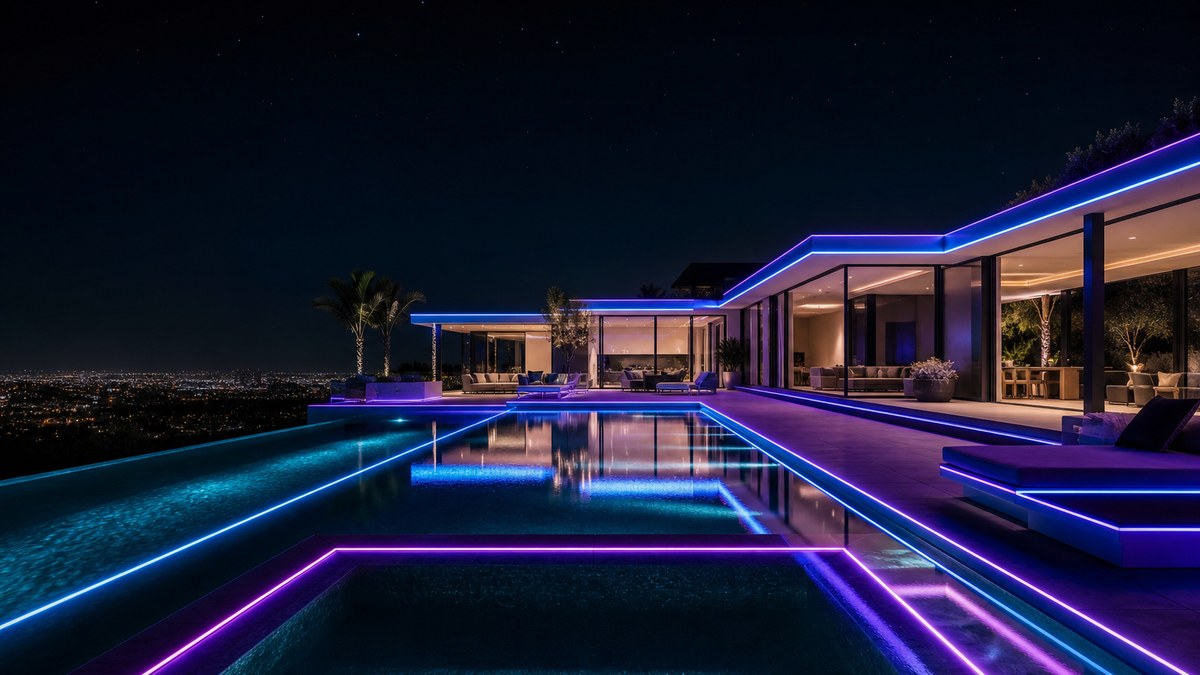
Comparing fiber optic lighting manufacturers is harder than it looks. Search for a supplier and you will find catalog sites, overseas marketplaces, cable-by-the-meter sellers, and a handful of companies that actually engineer complete systems. They all use the same words: "side-glow," "waterproof," "RGB," "custom." But the results in your pool or on your building can be very different.
This guide shows you how to evaluate fiber optic lighting suppliers for pools and outdoor buildings. You will learn what separates a real system manufacturer from a cable reseller, the ten questions to ask before you buy, what custom-made fiber optic lighting solutions should include, and what a complete system costs. We use our own 360° laser fiber systems as the worked example, with real published pricing, so you have a benchmark to compare every quote against.
The best fiber optic lighting manufacturer for a pool or building is one that supplies a complete, matched system (light source, fiber, controller and mounting hardware), publishes clear pricing and warranty terms, and supports the design and installation.
- Light source matters most: it decides brightness, color and how far the fiber can run
- Check run length: ask how many meters one illuminator can drive with even color
- Demand a system warranty: not just a cable warranty
- Ask about safety: the fiber should carry zero electricity; a licensed electrician powers the unit
- 360 Fiber benchmark: complete systems from $7,995 (50 m) to $14,995 (200 m, DMX, multi-zone)
What fiber optic lighting manufacturers actually make
A fiber optic lighting system is not one product. It is three or four products that must work together:
- The illuminator (light source). This is the engine. It creates the light and pushes it into the fiber. Older systems used halogen or metal halide lamps, most current systems use LED, and the newest use laser.
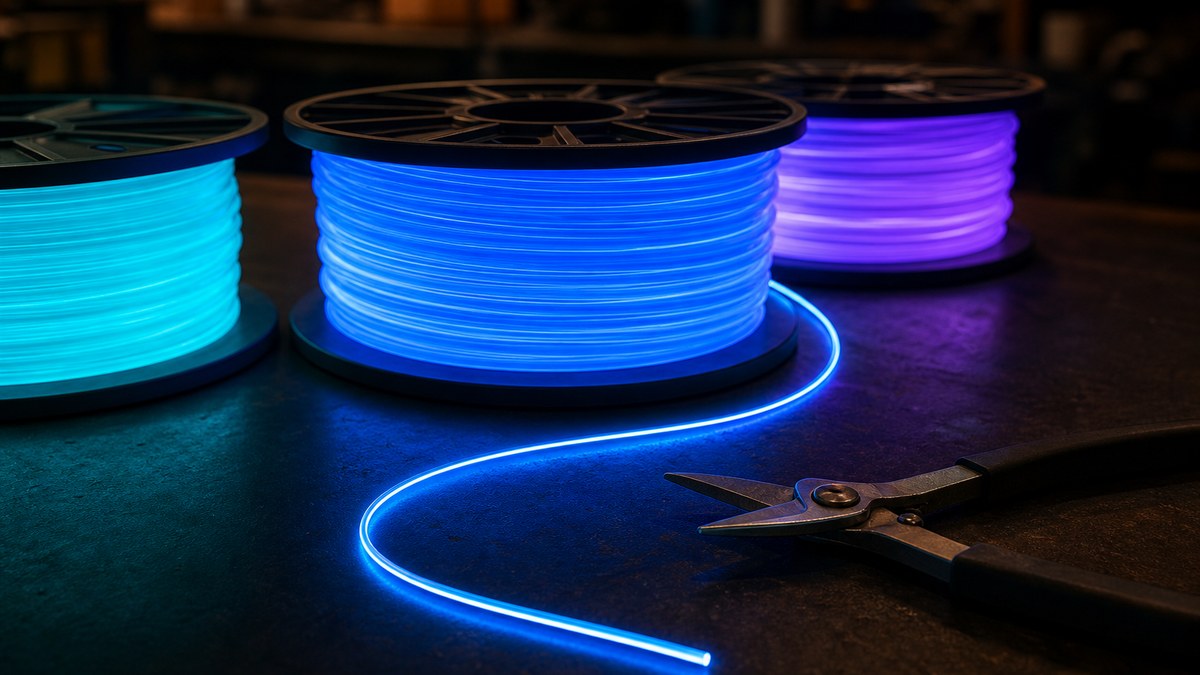
- The fiber. Side-glow fiber emits light along its length for outlines. End-glow fiber emits light only at the tip for star points and accents.
- The controller. It sets colors, fades and scenes. Commercial controllers add DMX so the lighting can join a building's lighting control system.
- Mounting hardware and track. This holds the fiber in place under pool coping, along a roofline or inside an architectural channel.
Many "manufacturers" you find online only make one of these parts, usually the cable. Others import generic kits and resell them. That is not always a problem for a small decorative project, but for a pool or a building exterior it matters, because the parts have to be matched. A weak illuminator on a long fiber run gives you a line that is bright at one end and dim at the other. A cable that is not rated for sun and water can yellow or cloud. A controller that does not speak DMX cannot join a commercial lighting scene.
When you compare fiber optic lighting suppliers, you are really comparing whole systems and the company that stands behind them.
Manufacturer, distributor or reseller?
There are three kinds of companies selling fiber optic lighting:
- System manufacturers and exclusive distributors own or control the technology, publish specs and warranties, and support the full project.
- Component makers produce one part, such as fiber cable or an LED light engine, and expect you or your contractor to assemble the rest.
- Marketplace resellers list generic kits with little documentation, uncertain warranties and no design help.
360 Fiber Lighting supplies a patent-pending 360° laser fiber optic technology as a complete system. That means one company supplies the laser unit, the fiber, the controller and the install kit, and one company answers your questions before and after the sale. Learn more about the 360° laser technology.
10 questions to ask any fiber optic lighting supplier
Use this checklist on every quote. A good supplier will answer each one clearly and in writing.
1. What light source does the system use?
The light source decides almost everything: brightness, color quality, how far the light travels and how long the system lasts. Traditional halogen and metal halide illuminators run hot and need lamp changes. LED illuminators are more efficient but often struggle to keep color rich over long runs. Laser light is highly concentrated, which is why our patent-pending laser system delivers 3x better color saturation than LED ribbon.
2. How many meters can one illuminator drive?
This is the question that exposes weak systems. Ask for the maximum run length from a single light source, and ask whether color and brightness stay even along it. More illuminators mean more electrical connections, more equipment to hide and more points of failure. A single 360 Fiber laser unit runs 200+ meters of fiber, enough to outline a large pool, spa and deck, or a long building roofline.
3. Is the fiber true 360° side-glow?
Some side-glow fibers are brightest on one side, so the line looks patchy from certain angles. Ask whether the fiber glows evenly around its full circumference. Our fiber delivers true 360° illumination, so it reads as a smooth, solid line of light from the water, the deck or the street.
4. Is it rated for outdoor and underwater use?
Pools and building exteriors are hard on lighting: sun, rain, chlorine, heat and cold. Ask whether the fiber is fully waterproof and how the light source is protected. Our fiber is 100% waterproof, and the Professional Pool System includes a weatherproof laser unit and pool-specific mounting hardware.
5. Where is the electricity?
With any real fiber optic system, the answer should be: only at the light source. The fiber carries light, not current, so there is zero electricity in the fiber and nothing electrical at the waterline. The light source still needs power, and a licensed electrician should connect it according to local code, including NEC Article 680 near pools. For more, read our guide to the safest pool lighting.
6. Can the fiber be cut to length on site?
Custom projects rarely match stock lengths. A good system lets the installer cut the fiber to any length and bend it around curves, free-form pool shapes, columns and canopies without damage.
7. What controller and color options are included?
Residential owners usually want easy color selection and a few scenes. Hotels, restaurants and commercial buildings often need DMX, multiple zones and programmed shows. Ask what the controller does, and whether it is included in the price.
8. What exactly does the warranty cover, and for how long?
Look for a written warranty on the whole system, not just the cable. Our warranties are 1 year on the Residential Starter, 2 years on the Professional Pool System and 3 years on the Commercial / Architectural system, plus a 30-day money-back guarantee on every order.
9. Is pricing published, and what is included?
Many fiber optic lighting manufacturers are "call for quote" only. That makes it hard to compare. Ask for a line-item quote that separates equipment, fiber length, controller, hardware and installation labor. Our system prices are published on the pricing section of our homepage.
10. What design and installation support do you provide?
Even the best product can look bad if the layout is wrong. Ask whether the supplier will review your plans and photos, recommend a fiber length and illuminator location, and support your pool builder or contractor. We offer free consultations, setup guides and video support, and professional installation support on commercial projects.
If a supplier cannot tell you how far one light source can drive the fiber, or will not put the warranty in writing, keep looking. Those two answers predict most of the problems owners see after installation.
How fiber optic lighting suppliers compare
Here is how the main supplier types stack up for pool and outdoor building projects.
| What to check | 360° Laser Fiber System | Typical LED Fiber Kit | Marketplace Cable + Generic Light |
|---|---|---|---|
| Light source | Patent-pending laser | LED light engine | Varies, often unbranded LED |
| Run from one source | 200+ meters | Shorter; fades with distance | Often undocumented |
| Color quality | 3x saturation vs LED ribbon | Good near the source | Inconsistent |
| Glow pattern | True 360° side-glow | Often one-sided | Unknown |
| Electricity in the fiber | None | None | None in fiber; light source quality varies |
| Controller | RGB, or DMX multi-zone (commercial) | Basic remote | Basic remote |
| Warranty | 1–3 years + 30-day money-back | Varies | Often none |
| Published pricing | Yes | Sometimes | Yes, but parts only |
| Design & install support | Consultation, guides, video, pro support | Limited | None |
The cheapest cable is rarely the cheapest project. If you need three generic light sources to cover what one laser unit drives, you pay for extra equipment, extra electrical work and extra hiding spots, and you still may not get even color end to end.
What "custom-made fiber optic lighting solutions" should include
Almost every supplier says they offer custom solutions. For pools and outdoor buildings, a truly custom system should include:
- A layout review. Every line you want lit, measured, with the best location for the light source.
- The right fiber length. Sized to your project with room for routing, not a guess.
- A matched light source. Powerful enough to keep color even across the whole run.
- Zoning and control. Separate zones for pool, spa, steps, deck or facade, and DMX when needed.
- Custom color programming. Brand colors for a hotel or restaurant, holiday scenes, or a signature color for your home.
- Mounting hardware for your surfaces. Pool coping, stone, stucco, metal roof edges or architectural channels.
- Install guidance. For your pool builder, electrician or contractor, plus support during the job.
Our standard systems cover most projects, and our Commercial / Architectural package adds multi-zone capability, a DMX-compatible controller and custom color programming. For projects beyond that, we build custom configurations. Tell us about it on our contact form.
Real system pricing: a benchmark for every quote
Because so many fiber optic lighting manufacturers hide pricing, here is ours in full (early-bird pricing at the time of writing). Use it as a benchmark when you compare quotes.
Residential Starter
- LF40 4-watt laser unit
- 50 m fiber optic cable
- RGB color controller
- Basic installation kit
- Setup guide & video support
- 1-year warranty
Professional Pool System
- LF40 4-watt weatherproof unit
- 100 m fiber optic cable
- Premium RGB controller
- Pool-specific mounting hardware
- Professional installation kit
- 2-year warranty
Commercial / Architectural
- LF120 12-watt laser unit
- 200 m fiber optic cable
- DMX-compatible controller
- Multi-zone capability
- Custom color programming
- 3-year warranty
Prices cover the system: the laser unit, fiber, controller and install kit. Installation labor by your pool builder, contractor or electrician is separate and depends on the project. Every order includes a 30-day money-back guarantee. Custom configurations are quoted after a consultation. Call for current availability.
How to compare a quote against these numbers
- Normalize by meters. Compare the fiber length each quote includes, not just the total.
- Count light sources. If a quote needs several illuminators to cover 100 or 200 meters, add their cost and the extra electrical work.
- Check the controller. Is it included? Does it do DMX and zones if you need them?
- Read the warranty. Does it cover the light source, or just the cable?
- Ask about labor. Make sure every quote treats installation the same way.
Get a free system consultation
Send us your plans or photos. We will recommend the right system, fiber length and layout, and answer every question on this list.
Choosing a supplier for pools
Pools are where fiber optic lighting shines, and where a bad supplier choice shows up fastest. For a pool project, focus on four things:
- Even color around the whole perimeter. The far side of the pool should look as rich as the side nearest the equipment pad.
- Waterproof fiber and pool mounting hardware. The fiber sits at the waterline under the coping, on steps, benches and spa edges.
- Enough length for everything you want lit. Pool, spa, steps, tanning ledge, spillover and water features add up quickly.
- A dry, accessible light source. Service should never mean draining the pool.
For most larger residential pools, the Professional Pool System with 100 meters of fiber is the best fit. Smaller pools, spas and courtyard water features often fit the 50-meter Residential Starter. Resort and lagoon pools usually need the 200-meter Commercial / Architectural system. See our full fiber optic pool lighting buyer's guide for sizing and installation details, and browse pool lighting ideas for design inspiration. If you are still weighing fixtures, our best LED pool lights guide covers the LED side.
Choosing a supplier for outdoor buildings
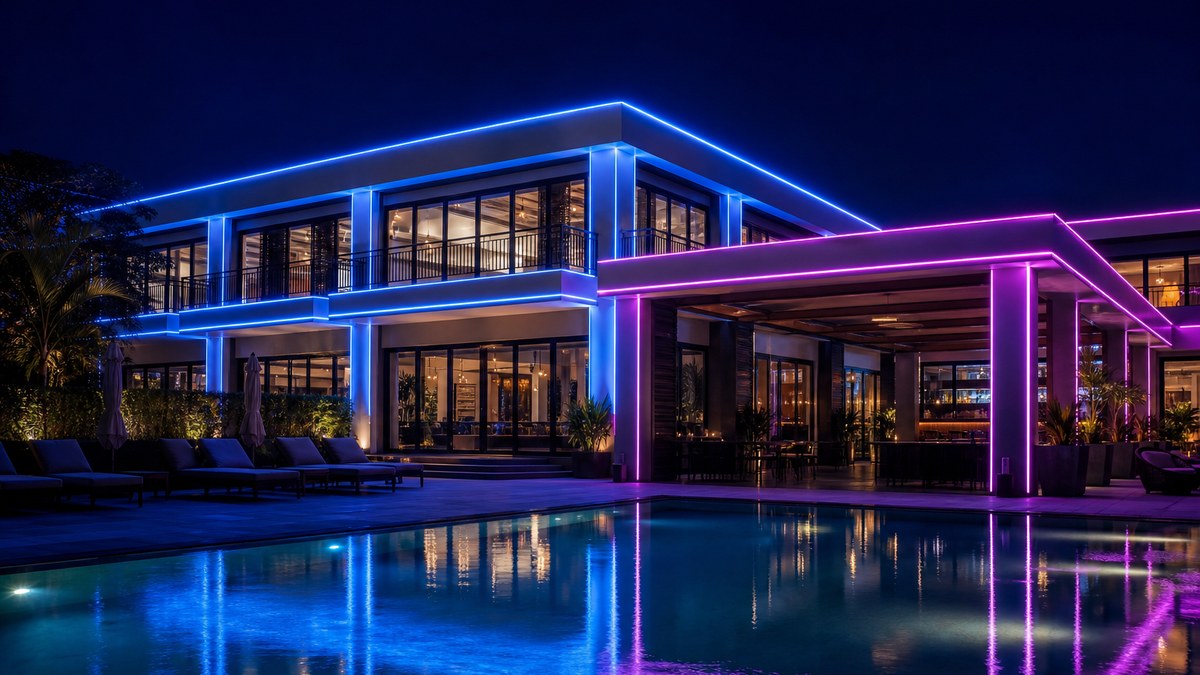
Building exteriors put different demands on fiber optic lighting. Runs are longer, the lighting is seen from farther away and it often has to match a brand. When you evaluate suppliers for a facade, roofline, canopy or sign frame, look for:
- Long runs from one source. Rooflines and parapets can run hundreds of feet. The 200-meter capacity of the LF120 laser unit keeps the equipment count low.
- DMX and multi-zone control. Needed to tie into building lighting controls and to run separate zones for different elevations.
- Custom color programming. Brand colors, seasonal themes and event scenes.
- No heat and no electricity along the line. Useful near people, signage, wood trim and other heat-sensitive materials.
- Sustainability. Our fiber and components use 100% recyclable materials.
The technology was named LDI 2024 Best New Product and was selected by Genesis for its 2026 GV80 campaign, so it is proven in high-visibility work. For hotels, casinos, restaurants and commercial property, see our commercial lighting services, our Luminance design-build program and the architectural building lighting guide. You can also see where the system is used on our applications section.
Fiber optic lighting near me: does location matter?
Many buyers search for "fiber optic lighting near me" expecting to need a local shop. For a complete system, location matters less than you might think. The system ships as a kit, the design work happens by consultation with your photos and plans, and your own pool builder, contractor and licensed electrician handle the install on site. What matters is that the supplier supports your local team during the project.
We serve customers across the United States this way, with consultations, installation guides, video support and professional support on commercial jobs. If you are in Texas, our network also includes local lighting teams listed at the end of this guide.
Installation: what a good supplier helps with
- Plan the layout. Mark every line to be lit and total the meters.
- Choose the light source location. Dry, ventilated and within reach of the runs, such as the pool equipment pad or a utility room.
- Install the track. Set in the coping or structure in new construction, or retrofitted under existing coping or in a low-profile surface track.
- Cut and seat the fiber. Cut to length and press into the track.
- Power the unit. A licensed electrician connects the light source per local code (NEC 680 near pools).
- Program the colors. Set colors, fades, scenes and zones.
Bring your fiber optic lighting supplier in before the coping or facade finishes are set. Planning the track during construction costs far less than adding it later.
Frequently Asked Questions
How do I choose between fiber optic lighting manufacturers?
What is the difference between a fiber optic lighting manufacturer and a reseller?
What should custom-made fiber optic lighting solutions include?
How much does a fiber optic lighting system cost?
How far can fiber optic lighting run from one light source?
Is fiber optic lighting safe for pools and outdoor buildings?
Is laser fiber better than LED fiber optic lighting?
Do I need a local fiber optic lighting supplier near me?
What warranty should a fiber optic lighting system have?
Can fiber optic lighting be cut to custom lengths?
Get the complete 360° laser fiber system
Complete laser fiber systems for pools and outdoor buildings, with published pricing, written warranties and a 30-day money-back guarantee.
Related guides
Have more questions? See our fiber lighting FAQ or browse the 360 Fiber blog.
Explore our lighting network: fiber optic star ceilings, premium pool lighting, Dallas commercial LED lighting, statewide Texas LED lighting, Fort Worth LED lighting, Arlington LED services, Plano LED lighting, Irving LED solutions, wholesale LED solutions, modular building solutions, and modular structures in Dallas.